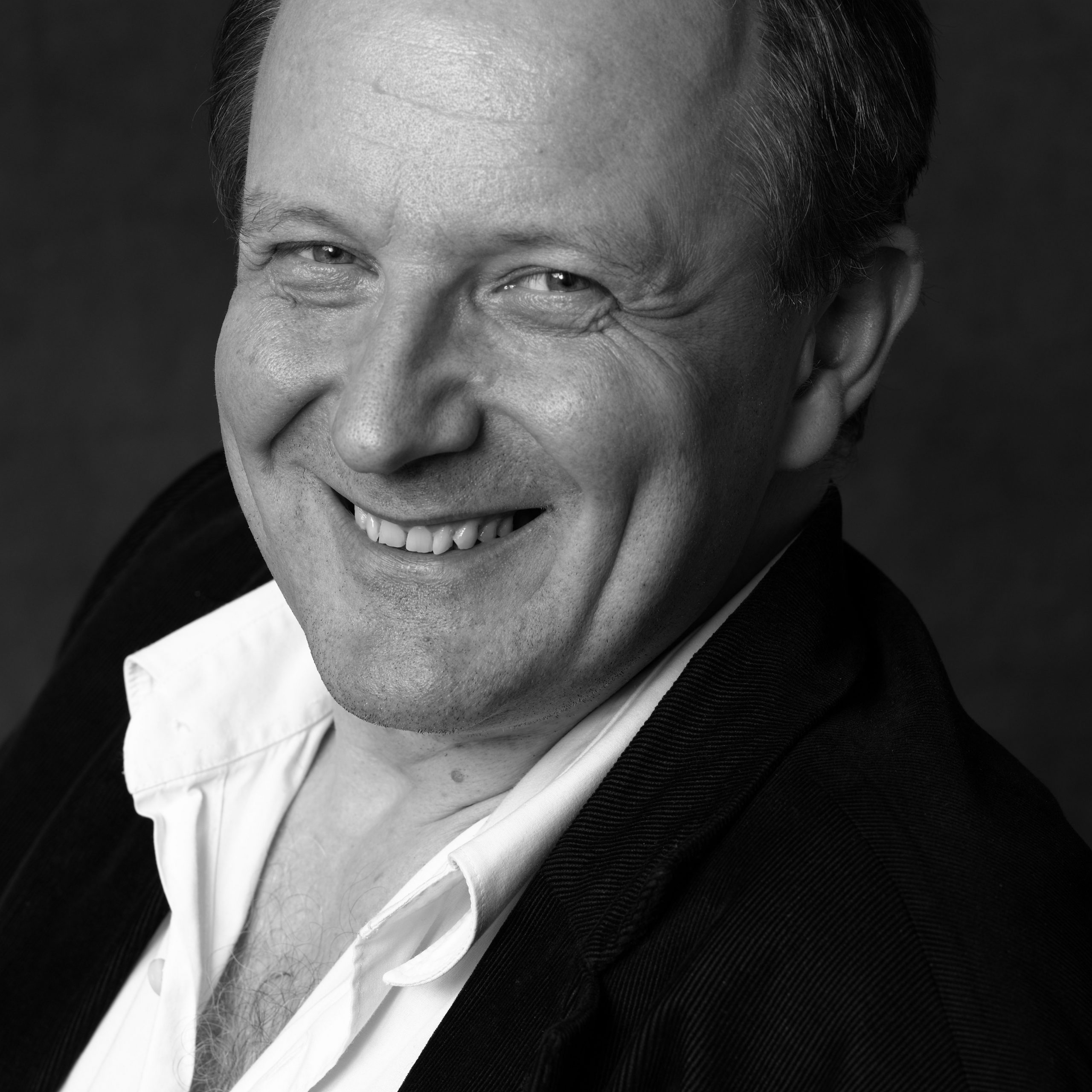
Biography
Bernfried E. G. Pröve
Bernfried E. G. Proeve is a German concert pianist and composer, known for his interpretively powerful performances of works by J. S. Bach, L. v. Beethoven, Franz Schubert, Robert Schumann and Felix Mendelssohn Bartholdy, of modern avant-garde composers such as I. Xenakis, P. Boulez, K. Stockhausen and B. A. Zimmermann, and of his own piano works. His playing unites technical precision with deep emotional expression.
He is regarded as a specialist in the polyphonic structures of Baroque music (recordings of J. S. Bach's Well-Tempered Clavier, Books I and II), yet also interprets Romantic and modern works with the utmost transparency.
In 1989 he won third prize and in 1990 first prize at the composition competition of the state capital Stuttgart. In 1995 he received the prize of the International Forum of Young Composers Montreal, second prize at the Carl Orff Opera Competition and second prize at the European Composition Competition Metz.
Pröve quickly established himself as a sought-after soloist, performing frequently with the orchestra of the Berlin University of the Arts under Stefan Anton Reck. His debut CD of his own works (2007) was enthusiastically received by the critics; it includes his Fifth String Quartet (Arditti String Quartet) and the work “Merz-Transitus” on texts by Kurt Schwitters.
He has worked with conductors such as Peter Eötvös, Stefan A. Reck and Lothar Zagrosek and has devoted himself to contemporary music, performing works by György Kurtág, Helmut Lachenmann (“Ein Kinderspiel”) and Iannis Xenakis (“Herma”, “Evryali”).
Alongside his concert career he has taught at the CJD Musische Akademie Braunschweig since 2000 and has given piano masterclasses in Skopje (North Macedonia), Daegu (South Korea), Xiamen, Beijing and Haikou (China). In 2007–2008 he was Professor di Musica at the Scuola Germanica, Italy. Important impulses came from masterclasses with Pierre-Laurent Aimard (Paris) and Marc-André Hamelin (Canada/USA).
Curriculum vitae: a path of excellence
Early training and studies. Pröve began composing at the age of nine. At fourteen he received a scholarship from the Braunschweig municipal music school for pre-professional training, studying piano with Hans-Dieter Meyer-Moortgat and Prof. Karl-Heinz Kämmerling.
- Berlin University of the Arts: degree in school music (main subject organ) and composition with Prof. Isang Yun, 1986.
- Postgraduate studies (1986–1991): composition (Prof. Klaus Huber), conducting (Prof. Francis Travis), electronic music (Prof. Mesias Maiguashca) and music theory (Prof. Peter Förtig); diploma 1994.
- International specialisation: composition courses with Franco Donatoni, Elliott Carter and Gérard Grisey; in 1995 the “Cursus de composition et d'informatique musicale” at IRCAM, Paris.
- Doctorate and conducting: doctoral studies at the École des Hautes Études en Sciences Sociales with Hugues Dufourt; conducting studies with Peter Eötvös, 1996–1998.
Career highlights and teaching. Pröve has received numerous prizes and scholarships, including the Villa Massimo scholarship in Rome (1994/95), the Carl Orff Prize for opera composers and first prize of the state capital Stuttgart for his orchestral work “ANTHAER”. Masterclasses have taken him to Seoul, Beijing, Shanghai and Skopje; he has taught at the CJD Musische Akademie Braunschweig since 2000 and was Professor di Musica at the Scuola Germanica in Italy in 2007–2008.
Artistic statement: philosophy and influences
Pröve's artistic identity is twofold: he is in demand worldwide both as an interpretively powerful pianist and as a visionary composer. As a pianist he is a specialist in the polyphonic structures of Baroque music – documented by his recordings of the Well-Tempered Clavier – yet his range extends to the complex works of the modern avant-garde.
Sound aesthetics: his works are marked by transparency and a union of musical
structure with emotional depth.
Tradition: intensive engagement with J. S. Bach, Beethoven, Schubert
and Schumann.
Modernism: interpretation of and inspiration from I. Xenakis, P. Boulez and
K. Stockhausen.
Repertoire
- Scarlatti: sonatas · J. S. Bach: The Well-Tempered Clavier, Books I and II
- Handel: Chaconne
- W. A. Mozart: complete piano sonatas, Fantasia in D minor
- L. v. Beethoven: the 32 piano sonatas; Piano Concertos Nos. 1, 2, 4 and 5
- Franz Schubert: Sonata in B flat major, Sonata in A major (“Spring Sonata”)
- Felix Mendelssohn Bartholdy: Rondo capriccioso, Songs Without Words
- Robert Schumann: Davidsbündlertänze, Abegg Variations, Novelletten, Symphonic Études
- Franz Liszt: Sonata in B minor, Funérailles, Consolations, Études d'exécution transcendante
- Claude Debussy: Préludes, Books I and II
- Maurice Ravel: Gaspard de la nuit, Miroirs, Jeux d'eau
- Olivier Messiaen: Vingt regards sur l'Enfant-Jésus
- Arnold Schoenberg: Suite for Piano, Piano Pieces
- Anton Webern: Variations op. 27
- Pierre Boulez: Piano Sonata No. 1, Notations
- Karlheinz Stockhausen: Klavierstück IX
- Iannis Xenakis: Herma, Evryali
- Bernfried E. G. Proeve: Piano Sonatas I–XIII, Three Piano Pieces for Sheila Arnold, Piano Pieces, Waltz in G major, “Die Zeitmaschine”, “Salto” for piano solo, “Norwegian Boots”, “Études révolutionnaires I–XIII”
Teaching computer music
I understand the teaching of computer music and sound art not merely as the transfer of knowledge, but as a collaborative process of aesthetic sensitisation, technical and technological appropriation, and the establishment of one's own musical language, aesthetic and style. In my previous teaching – as a researcher at IRCAM Paris, at the Studio for Electronic Music Freiburg, the SWR Experimentalstudio Freiburg and the Electronic Studio of TU Berlin – I have developed teaching concepts of my own.
My approach to teaching electronic, computer and synthesizer music rests on three pillars:
- Technical foundations as a means of expression: I teach not only algorithmic thinking, sensor technology, spatial audio, Max live electronics, Ableton, Logic, Cubase and analogue, digital and hybrid circuit design, but always their aesthetic potential.
- Curatorial learning: students take on curatorial responsibility by jointly organising concerts, installations and performances.
- Mentoring as equals: I see the supervision of artistic doctorates as mentoring on equal terms, accompanying the process of artistic research with the aim of fostering critical reflection on one's own practice without curtailing artistic autonomy.
In the field of sound art I am an active artist who exhibits and performs internationally (including Ars Electronica, ICMC, IRCAM Paris, CTM and ZKM).